
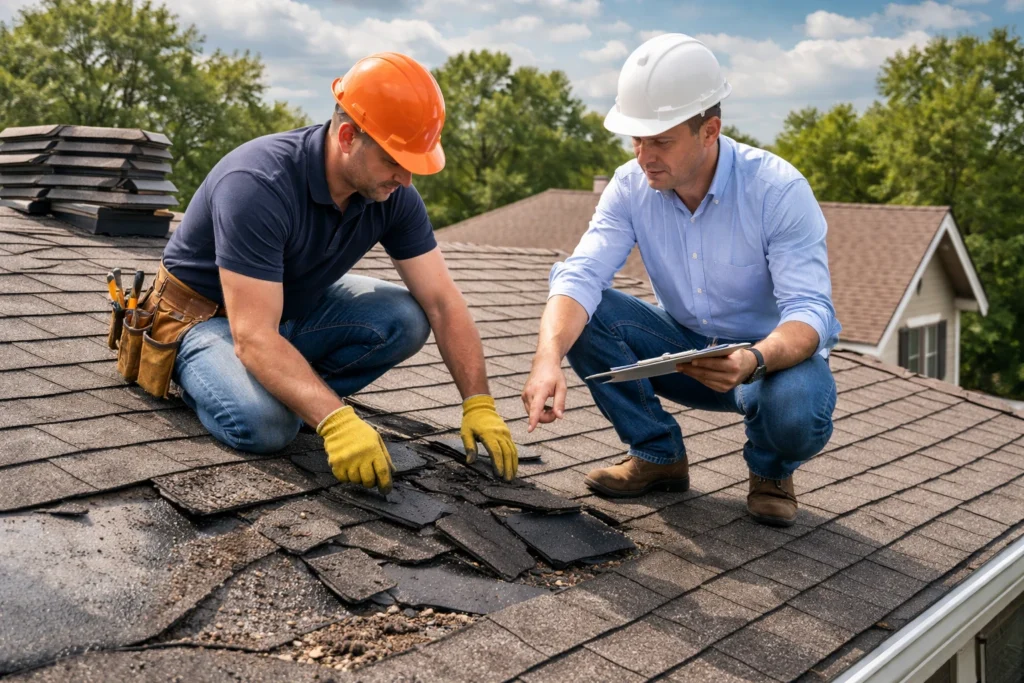
When a Texas storm tears through Haltom City, it doesn’t knock politely. It slams hail into shingles. It rips flashing loose. And it pushes water where it never belonged. And in that moment, what most homeowners don’t realize is this: a roofing public adjuster can be the difference between a partial patch job and a fully funded roof replacement.
That’s not exaggeration. It’s math.
Roof claims are often the largest portion of a homeowner’s insurance payout. Yet they are also some of the most underpaid and misunderstood. I’ve seen it happen again and again — quick inspections, surface-level estimates, depreciation confusion, and settlements that look decent at first glance but fall short once the contractor opens up the roof system.
Let’s break this down clearly. If your roof has storm damage in Haltom City, here’s exactly how a roofing public adjuster protects your claim — and your wallet.
What Is a Roofing Public Adjuster?
A roofing public adjuster is a licensed professional who represents you, not the insurance company, in a roof damage claim.
That distinction matters.
There are three types of adjusters involved in property claims:
| Type of Adjuster | Who They Work For | Their Priority |
| Staff Adjuster | Insurance Company | Protect insurer’s financial interest |
| Independent Adjuster | Hired by insurer | Protect insurer’s financial interest |
| Roofing Public Adjuster | Policyholder (you) | Maximize your settlement |
Insurance company adjusters are not your enemy. But they are not your advocate either. Their job is to evaluate claims according to company guidelines.
A roofing public adjuster works exclusively for the policyholder. In Texas, public adjusters must be licensed and regulated. They can legally interpret policy language, prepare detailed estimates, and negotiate settlements on your behalf.
And in complex roof claims? That representation can change everything.
Why Roof Claims in Haltom City Are So Complicated
North Texas weather is unpredictable. One week it’s clear. The next, a hailstorm leaves golf ball-sized impacts across your neighborhood.
Common roof damage in Haltom City includes:
- Hail bruising and fractured shingles
- Wind-lifted shingles
- Creased tabs
- Damaged flashing
- Granule loss exposing asphalt mat
- Water intrusion through underlayment
- Code compliance issues on older roofs
Here’s the problem. Not all damage is obvious from the ground. And not all damage qualifies as a “repair.”
Insurance companies may argue for partial repairs. Contractors may push for full replacement. The homeowner stands in the middle.
This is where a roofing public adjuster steps in with documentation — not emotion.
Why Insurance Companies Often Underpay Roof Claims
Let’s be honest. Insurance companies are businesses.
Underpayment usually doesn’t happen because someone is malicious. It happens because:
- Inspections are rushed
- Damage scope is limited
- Depreciation is applied heavily
- Code upgrades are ignored
- Matching issues are dismissed
- Supplemental damage is missed
There are two valuation models you must understand:
Replacement Cost Value (RCV) – The cost to replace the roof with similar materials.
Actual Cash Value (ACV) – Replacement cost minus depreciation.
If your roof is 15 years old, depreciation can slash thousands off the initial payout.
A roofing public adjuster reviews your policy carefully to determine what’s recoverable. Sometimes depreciation is recoverable after repairs. Sometimes code upgrades are covered under ordinance and law provisions. But if no one looks for it, it won’t be included.
Details drive dollars.
What a Roofing Public Adjuster Actually Does
This isn’t guesswork. It’s structured work.
1. Comprehensive Roof Inspection
A proper inspection includes:
- Close-up shingle analysis
- Test squares for hail impact density
- Flashing review
- Vent penetration inspection
- Attic moisture evaluation
- Photo documentation
- Drone imaging when necessary
Insurance inspections can be brief. A roofing public adjuster’s inspection is methodical.
2. Policy Review
Most homeowners never read their full policy. It’s long. It’s dense.
A roofing public adjuster identifies:
- Deductible structure
- Cosmetic damage exclusions
- Matching provisions
- Code upgrade coverage
- Time limitations
Coverage interpretation matters more than people think.
3. Estimate Preparation
Public adjusters use industry-standard estimating platforms to build a line-by-line repair or replacement estimate. That includes:
- Tear-off costs
- Underlayment
- Flashing
- Ridge caps
- Drip edge
- Ventilation components
- Starter shingles
- Waste factor
- Labor and overhead
It’s comprehensive. It’s defensible.
4. Negotiation
Negotiation isn’t confrontation. It’s documentation plus persistence.
If the insurance estimate comes in lower than the actual damage scope, the roofing public adjuster:
- Submits supplemental documentation
- Requests re-inspections
- Challenges scope omissions
- Clarifies code requirements
Sometimes it’s one conversation. Sometimes it’s several.
But silence never wins claims. Advocacy does.
Step-by-Step: The Roof Claim Process with a Roofing Public Adjuster
Here’s what the process typically looks like:
- Initial Consultation – Damage discussion and preliminary evaluation
- Full Roof Inspection – Detailed documentation
- Policy Analysis – Coverage interpretation
- Claim Filing – If not already filed
- Insurance Inspection Coordination – Attending inspection
- Estimate Comparison – Public adjuster vs insurer scope
- Negotiation Phase – Supplements and revisions
- Settlement Agreement – Final payout determination
- Repair Coordination – Contractor execution
Notice something? Structure.
Without structure, roof claims drift. And drifting claims lose leverage.
Roofing Public Adjuster vs Roofing Contractor
This confusion happens constantly in Haltom City.
| Roofing Contractor | Roofing Public Adjuster |
| Repairs and installs roofs | Negotiates insurance claims |
| May provide estimate | Prepares formal claim valuation |
| Not licensed to interpret policy | Licensed to interpret policy |
| Construction-focused | Financial recovery-focused |
In Texas, contractors cannot legally negotiate insurance claims on behalf of homeowners unless licensed as public adjusters.
You often need both. The contractor builds the roof. The roofing public adjuster builds the claim.
Different roles. Different expertise.
When Should You Hire a Roofing Public Adjuster?
Not every claim requires one. But certain situations strongly justify it:
- Claim denial
- Underpayment
- Complex roof systems
- Commercial properties
- Multiple storm events
- Code upgrade disputes
- Large dollar losses
The earlier they’re involved, the stronger the claim foundation.
Waiting until after repairs can limit leverage. Timing matters.
Commercial Roof Claims: A Different Level of Complexity
Residential shingles are one thing. Commercial roofing systems are another.
Flat roofing systems like:
- TPO
- Modified bitumen
- Built-up roofing
- EPDM membranes
require technical evaluation.
Damage isn’t always visible. Water intrusion may occur below membrane seams. Improper drainage can compound storm damage.
Commercial claims may also include:
- Business interruption
- Tenant impact
- Interior finish damage
- Structural decking issues
A roofing public adjuster experienced in commercial systems understands these layered exposures.
And commercial losses escalate quickly.
How a Roofing Public Adjuster Maximizes Settlement
Let’s talk results.
Here’s how value is increased ethically and legally:
- Identifying full replacement when repairs are insufficient
- Including all roof components, not just shingles
- Accounting for code-mandated upgrades
- Ensuring matching of materials
- Supplementing hidden damage discovered during tear-off
- Challenging improper depreciation
Small omissions add up.
For example:
| Overlooked Item | Average Cost Impact |
| Drip edge replacement | $800 – $1,500 |
| Code upgrade compliance | $2,000 – $8,000 |
| Ventilation correction | $1,500 – $4,000 |
| Full underlayment | $3,000+ |
These aren’t minor adjustments. They’re thousands.
How Roofing Public Adjusters Get Paid
Most operate on a contingency fee. That means:
- No upfront cost
- Paid only if claim recovery increases
- Percentage of settlement amount
This aligns incentives. If they don’t improve the claim, they don’t get paid.
Before signing, confirm:
- License number
- Fee percentage
- Written contract
- Scope of services
Transparency builds trust.
Common Mistakes Homeowners Make
I’ve seen these derail otherwise strong claims:
- Waiting too long to file
- Accepting first settlement offer
- Not documenting damage immediately
- Hiring unlicensed contractors
- Ignoring policy deadlines
- Not requesting re-inspection
The biggest mistake? Assuming the initial offer is final.
It rarely is.
Texas Claim Deadlines You Must Know
Texas has specific timelines that affect roof claims:
- Prompt payment rules
- Statute of limitations for dispute
- Supplemental claim deadlines
- Appraisal clause timing
Missed deadlines weaken negotiating position.
A roofing public adjuster tracks these deadlines carefully. That alone can protect your rights.
Choosing the Right Roofing Public Adjuster in Haltom City
Not all adjusters are equal.
Look for:
- Active Texas license
- Specific roof claim experience
- Local storm familiarity
- Clear communication
- Transparent contract terms
- Documented case results
Ask questions. Demand clarity.
The right professional should explain the process without pressure.
Final Thoughts: Protecting Your Roof Investment
Your roof isn’t cosmetic. It’s structural protection. It shields your home from Texas heat, wind, and hail.
When it’s damaged, the financial stakes are high. And the claims process is rarely simple.
A roofing public adjuster brings structure, documentation, and negotiation strength to what is often the largest component of a property insurance claim. They translate policy language into financial recovery. They challenge incomplete scopes. And they protect your leverage.
And in Haltom City — where storms are not rare — that expertise matters.
If your roof has suffered damage, don’t rush to settle. Don’t guess at coverage. Don’t leave thousands on the table.
Slow down. Evaluate. Get professional guidance.
Because once a claim closes, reopening it becomes much harder.
Your roof protects your home. Make sure your claim protects your investment.